
logo
सितम्बर . 08, 2025 19:13 सूची पर वापस जाएं

Frosted Glass for Sale - Privacy Panels & Custom Solutions

The Advanced Technology and Applications of Frosted Glass Solutions

In contemporary architecture and interior design, the demand for functional yet aesthetically pleasing materials is ever-increasing. Among these, frosted glass for sale stands out as a versatile and high-performance solution, offering unparalleled privacy, diffused light, and a modern aesthetic. This comprehensive overview delves into the intricate details of frosted glass, from its manufacturing nuances and technical specifications to its diverse application scenarios, aiming to inform B2B decision-makers and engineers about its strategic value.

The market for advanced glass products, including various forms of frosted glass, is driven by innovations in design, energy efficiency, and privacy requirements. As industries ranging from commercial construction to specialized medical facilities seek materials that combine form and function, the technical advantages of frosted glass become critically apparent. Our exploration will cover its production, detailed parameters, and the strategic benefits it offers across numerous sectors.

Industry Trends and Market Dynamics for Frosted Glass

The global market for privacy glass, a category which heavily includes frosted glass, is experiencing robust growth. Projections indicate a CAGR of approximately 7-9% over the next five years, driven by urbanization, increasing demand for privacy solutions in commercial and residential buildings, and the growing adoption of smart technologies. Key trends include:

  • Technological Integration: The emergence of automatic frosted glass, often integrated with smart home or building management systems, allows for on-demand privacy and light control. These systems utilize PDLC (Polymer Dispersed Liquid Crystal) technology, switching between transparent and opaque states with electric current.
  • Sustainability Focus: Manufacturers are increasingly focusing on eco-friendly production processes and materials, as well as the energy-saving benefits of frosted glass, which can reduce glare and heat gain.
  • Customization Demand: A significant trend is the increasing request for custom frosted glass solutions, tailored to specific aesthetic, privacy, or functional requirements, driving innovation in surface treatments and patterns.
  • Versatility in Applications: Beyond traditional partitions, frosted glass is finding new applications in interactive displays, automotive interiors, and specialized medical equipment, showcasing its adaptability.

These trends highlight a shift towards more sophisticated, adaptable, and energy-efficient glass solutions, positioning frosted glass for sale as a critical material in modern construction and design.

Manufacturing Process of Frosted Glass

The production of high-quality frosted glass involves a precise series of steps designed to achieve its characteristic translucent finish. The primary methods include acid etching and sandblasting, each yielding distinct aesthetic and functional properties.

Process Flow:

  1. Glass Preparation (Casting/Forging): High-quality float glass panels, typically meeting ASTM C1036 standards for flat glass, are selected. These panels undergo rigorous inspection to ensure a pristine surface free from defects, crucial for consistent frosting.
  2. Surface Treatment - Acid Etching:
    • The glass is cleaned thoroughly to remove any contaminants.
    • It is then exposed to an acid solution, typically hydrofluoric acid or other fluoride compounds, which chemically reacts with the silica in the glass.
    • This reaction creates microscopic pits and irregularities on the glass surface, diffusing light and producing the frosted effect. The depth and density of these pits determine the degree of opacity and light transmission.
    • Post-etching, the glass is thoroughly rinsed and dried. This method provides a smooth, uniform frosted finish that is resistant to fingerprints.
  3. Surface Treatment - Sandblasting (Abrasive Blasting):
    • Similar to etching, the glass is first cleaned.
    • A high-pressure stream of abrasive particles (e.g., sand, aluminum oxide, silicon carbide) is directed at the glass surface.
    • The impact of these particles physically abrades the surface, creating a textured, opaque finish.
    • This method allows for varying degrees of frosting and the creation of custom patterns by using stencils, making it ideal for custom frosted glass designs.
  4. Washing and Drying: After frosting, the glass undergoes a final industrial washing to remove any residual chemicals or abrasive particles, followed by hot air drying.
  5. Quality Control & Testing Standards: Each frosted glass panel is inspected for uniformity, light transmission, haze, and durability. Products typically adhere to international standards such as ISO 9001:2015 for quality management, ASTM C1048 for heat-treated flat glass, and ANSI Z97.1 for safety glazing materials. Service life for well-maintained frosted glass can extend beyond 20 years.

The choice of frosting method depends on the desired aesthetic, functional requirements, and target industry. For instance, acid-etched glass is often preferred in high-traffic areas due to its smooth, easy-to-clean surface, while sandblasted glass offers more pronounced texture and customization for decorative applications.
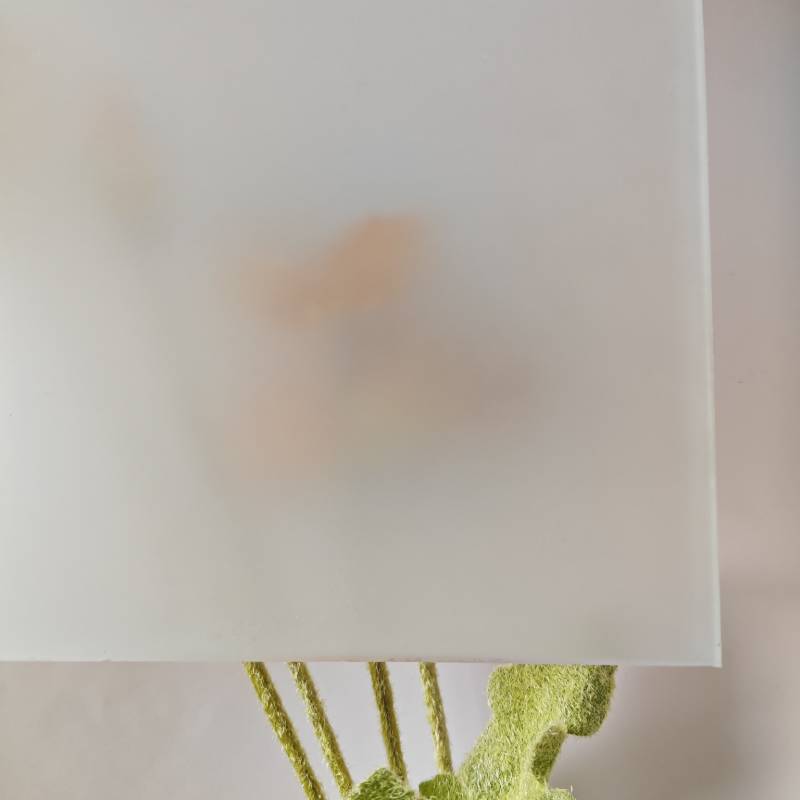
Frosted Glass for Sale - Privacy Panels & Custom Solutions

Technical Specifications and Performance Parameters

Understanding the technical specifications of frosted glass for sale is crucial for ensuring its suitability for specific architectural and industrial applications. Key parameters define its optical, mechanical, and thermal performance.

Parameter Specification Range Relevant Standard
Thickness (T) 3mm - 19mm (1/8" - 3/4") ASTM C1036, EN 572-2
Light Transmittance (VLT) 70% - 90% (depending on frosting level) ISO 9050, ASTM E903
Haze (%) 85% - 99% (indicating opacity/privacy) ASTM D1003
Thermal Conductivity (k-value) ~0.9 W/(m·K) (for single pane) ISO 8301
Durability/Abrasion Resistance High (acid-etched generally higher) ASTM C158
Maximum Panel Size Up to 3660mm x 2440mm (144" x 96") Manufacturer Specific

These parameters are critical for specifying the correct frosted glass panel for applications requiring specific light diffusion, privacy levels, or structural integrity. For example, in environments where high impact resistance is needed, tempered frosted glass or laminated frosted glass would be specified, adhering to safety glazing codes like ANSI Z97.1.

Application Scenarios and Target Industries

The versatility of frosted glass makes it an ideal choice across a myriad of sectors, offering distinct advantages:

  • Architectural & Commercial Construction: Used extensively for office partitions, conference rooms, storefronts, and lobby features. It provides privacy without blocking natural light, fostering open yet confidential work environments.
  • Residential & Hospitality: Ideal for bathroom enclosures, shower screens, windows requiring privacy, kitchen cabinet inserts, and decorative wall panels. Its aesthetic appeal enhances modern interior design.
  • Healthcare Facilities: Applied in patient rooms, examination areas, and laboratory partitions to ensure patient privacy while maintaining a sterile and light-filled environment. Easy to clean surfaces are a key advantage here.
  • Retail & Display: Utilized for display cases, shelving, and interior design elements to diffuse lighting, reduce glare, and create a sophisticated backdrop for products.
  • Industrial Applications (e.g., Petrochemical, Metallurgy, Water Supply & Drainage): While less common for direct process contact, specialized frosted glass variants (e.g., borosilicate frosted glass) can be used for sight glass in certain non-corrosive, non-abrasive applications where diffused light or privacy in control rooms is needed, or as part of safety barriers and enclosures. Advantages include corrosion resistance (especially acid-etched) and ease of maintenance in cleanroom settings.

The adaptability extends to frosted glass replacement projects, where older, less efficient glass types are upgraded to modern, privacy-enhancing solutions.

Technical Advantages of Frosted Glass

Beyond its aesthetic appeal, frosted glass offers a suite of technical advantages that make it a preferred material:

  • Enhanced Privacy: Its primary advantage, providing visual obscurity without completely blocking light, making it ideal for sensitive areas.
  • Diffused Light Transmission: It softens harsh sunlight, reducing glare and creating a more comfortable, evenly lit interior space. This contributes to energy saving by potentially reducing the need for artificial lighting.
  • Durability and Low Maintenance: Especially acid-etched variants are highly resistant to fingerprints, stains, and scratches, requiring minimal cleaning. This contributes to a longer service life and reduced operational costs.
  • Corrosion Resistance: Acid-etched surfaces are generally more resistant to common chemical agents than untreated glass, a benefit in environments where cleaning agents or mild chemicals might be present.
  • Acoustic Performance: When used in laminated or double-glazed units, frosted glass can also contribute to improved sound insulation, enhancing privacy and comfort.
  • Design Flexibility: Can be cut, shaped, drilled, and tempered, offering immense flexibility for custom frosted glass designs and integration into complex architectural plans.

Vendor Comparison for Frosted Glass Solutions

When sourcing frosted glass for sale, evaluating potential vendors is paramount. Key considerations extend beyond mere price to encompass quality, customization capabilities, and after-sales support.

Feature/Criterion High-Quality Vendor (e.g., TPTOP Glass) Standard Vendor
Product Quality & Consistency Consistent frosting uniformity, minimal defects, adherence to ISO/ASTM standards. Superior base glass quality. Variable frosting, potential for minor defects, less stringent quality control.
Customization & Design Flexibility Extensive options for thickness, size, patterns, color tinting, and integration with smart glass technologies (e.g., automatic frosted glass). Full support for custom frosted glass. Limited standard options, less capability for bespoke solutions.
Technical Support & Expertise Dedicated technical sales team, engineering support, detailed specification guidance, post-installation assistance. Years of experience (e.g., 10+ years in glass manufacturing). Basic product information, limited technical assistance.
Certifications & Compliance ISO 9001, ASTM, ANSI, CE certified products, demonstrating adherence to global quality and safety standards. May have basic or fewer certifications; compliance varies.
Lead Times & Logistics Efficient production schedules, reliable global logistics, on-time delivery. Potentially longer lead times, less predictable delivery.

A reputable vendor will not only supply high-quality frosted glass panels but also act as a strategic partner, offering expertise and support throughout the project lifecycle.

Customized Solutions and Application Case Studies

The true value of frosted glass often lies in its ability to be tailored to unique project demands. From specific dimensions to integrated technologies, customization ensures optimal performance and aesthetic integration.

Customization Options:

  • Dimensional Accuracy: Precision cutting and shaping to exact architectural specifications.
  • Levels of Translucency: Varying degrees of frosting to achieve precise privacy and light diffusion levels.
  • Integrated Features: Pre-drilled holes, notches, edgework (polished, beveled), and integration with hardware for easy installation.
  • Safety Enhancements: Tempering or laminating the frosted glass for increased strength and safety (e.g., shatter-resistant applications).
  • Specialty Coatings: Anti-glare, low-emissivity (Low-E), or easy-clean coatings for enhanced performance.

Application Case Studies:

Case Study 1: Corporate Office Privacy Walls
A leading tech firm required adaptable privacy for their open-plan office. We supplied and installed custom automatic frosted glass partitions for meeting rooms and executive offices. These panels, integrated with the building's smart system, allowed instant switching between transparent and opaque states. This solution provided on-demand privacy, optimized natural light flow, and reduced energy consumption for artificial lighting, enhancing employee comfort and productivity. The client reported a 15% improvement in perceived privacy and a more dynamic workspace atmosphere.

Case Study 2: High-End Residential Bathroom Enclosures
For a luxury residential development, custom frosted glass was specified for shower enclosures and vanity splashbacks. The acid-etched finish was chosen for its smooth feel and resistance to water spots and soap residue. Each panel was cut precisely to unique bathroom layouts, incorporating specific cut-outs for fixtures. This application delivered sophisticated aesthetics, robust privacy, and simplified maintenance for residents, achieving a high level of client satisfaction.

Case Study 3: Hospital Ward Partitions
A major hospital undertook a renovation project to improve patient privacy and infection control. We provided specialized tempered frosted glass panels for ward partitions and door inserts. The frosting provided patient dignity, while the tempered safety glass met stringent healthcare safety codes (e.g., NFPA 101). The smooth, easy-to-sanitize surface also contributed to maintaining a hygienic environment, crucial in medical settings.

Ensuring Quality, Authoritativeness, and Trustworthiness ()

Our commitment to delivering superior frosted glass for sale is underpinned by stringent quality control and transparent operational practices, adhering to Google's principles.

Certifications & Standards:

All products, including our diverse range of frosted glass panels, are manufactured in facilities holding ISO 9001:2015 certification for quality management. Our glass products meet or exceed industry standards such as ASTM C1036 (Standard Specification for Flat Glass), ASTM C1048 (Heat-Treated Flat Glass), and ANSI Z97.1 (Safety Glazing Materials). We pride ourselves on over a decade of experience in specialized glass manufacturing, serving a global clientele that includes prominent architectural firms and construction enterprises.

Product Testing & Data:

Each batch undergoes rigorous testing, including spectrophotometric analysis for light transmittance and haze, surface roughness measurements, and chemical resistance tests. Comprehensive data sheets and test reports are available upon request, providing verifiable parameters for every product. This commitment to data-driven quality ensures that our frosted glass consistently performs to the highest expectations.

Frequently Asked Questions (FAQ)

Q: What is the difference between acid-etched and sandblasted frosted glass?
A: Acid-etched glass has a smoother, more uniform finish due to a chemical process, making it highly resistant to fingerprints and easy to clean. Sandblasted glass, created by abrasive blasting, has a slightly coarser, more textured finish and allows for intricate custom patterns using stencils.
Q: Can frosted glass be tempered for safety?
A: Yes, both acid-etched and sandblasted frosted glass panels can be tempered or laminated to meet safety glazing requirements (e.g., for doors, shower enclosures, or balustrades), increasing their strength and ensuring they break into small, blunt pieces if fractured.
Q: What are the typical lead times for custom frosted glass orders?
A: Standard frosted glass for sale typically has a lead time of 7-14 business days. For custom frosted glass or large-volume orders, lead times can range from 3-5 weeks, depending on complexity and current production schedules. We provide precise estimates upon order confirmation.
Q: Is frosted glass suitable for outdoor applications?
A: Yes, high-quality frosted glass, especially when manufactured to resist environmental factors, can be used outdoors for privacy screens, balcony railings, or architectural facades. It maintains its aesthetic and functional properties under various weather conditions.

Lead Time, Fulfillment, and Warranty Commitments

We understand the critical importance of timely delivery and reliable support in B2B projects. Our fulfillment process is streamlined for efficiency:

  • Lead Time: Typical production lead times for standard frosted glass orders are 10-15 business days. For bespoke custom frosted glass or large-scale projects, lead times are confirmed at the quotation stage, usually ranging from 3-6 weeks, considering specific design and processing requirements.
  • Fulfillment: We offer flexible shipping solutions, including crating and freight forwarding, ensuring secure and on-time delivery to project sites globally. Each panel is meticulously packed to prevent damage during transit.
  • Warranty: All our frosted glass for sale products come with a comprehensive 10-year warranty against manufacturing defects and significant degradation of the frosted finish under normal use. Specific warranty terms are provided with each order.
  • Customer Support: Our dedicated B2B support team is available from 8 AM to 6 PM EST, Monday to Friday, via phone and email. We provide technical consultation, order tracking, and prompt resolution for any post-delivery inquiries or support needs.

Conclusion

The choice of frosted glass for sale represents a strategic investment in both the functionality and aesthetic appeal of any B2B project. Its ability to balance privacy with natural light, coupled with advanced technical properties and extensive customization options, positions it as an indispensable material in modern architecture and industrial design. By partnering with a reputable manufacturer, businesses can leverage cutting-edge glass technology to create innovative, sustainable, and highly functional spaces. Our commitment to quality, backed by rigorous testing, adherence to international standards, and comprehensive customer support, ensures that our frosted glass solutions deliver enduring value and performance.

References

  1. ASTM International. "ASTM C1036-16, Standard Specification for Flat Glass." West Conshohocken, PA: ASTM International, 2016.
  2. International Organization for Standardization. "ISO 9001:2015, Quality management systems – Requirements." Geneva, Switzerland: ISO, 2015.
  3. National Fire Protection Association. "NFPA 101: Life Safety Code." Quincy, MA: NFPA, 2021.
  4. The Glass Association of North America. "GANA Glazing Manual." Topeka, KS: GANA, 2019.
  5. Frost & Sullivan. "Analysis of the Global Smart Glass Market, Forecast to 2025." 2020.
शेयर करना
सितम्बर . 08, 2025 16:38 सूची पर वापस जाएं

Frosted Glass for Sale - Privacy Panels & Custom Solutions

The Advanced Technology and Applications of Frosted Glass Solutions

In contemporary architecture and interior design, the demand for functional yet aesthetically pleasing materials is ever-increasing. Among these, frosted glass for sale stands out as a versatile and high-performance solution, offering unparalleled privacy, diffused light, and a modern aesthetic. This comprehensive overview delves into the intricate details of frosted glass, from its manufacturing nuances and technical specifications to its diverse application scenarios, aiming to inform B2B decision-makers and engineers about its strategic value.

The market for advanced glass products, including various forms of frosted glass, is driven by innovations in design, energy efficiency, and privacy requirements. As industries ranging from commercial construction to specialized medical facilities seek materials that combine form and function, the technical advantages of frosted glass become critically apparent. Our exploration will cover its production, detailed parameters, and the strategic benefits it offers across numerous sectors.

Industry Trends and Market Dynamics for Frosted Glass

The global market for privacy glass, a category which heavily includes frosted glass, is experiencing robust growth. Projections indicate a CAGR of approximately 7-9% over the next five years, driven by urbanization, increasing demand for privacy solutions in commercial and residential buildings, and the growing adoption of smart technologies. Key trends include:

  • Technological Integration: The emergence of automatic frosted glass, often integrated with smart home or building management systems, allows for on-demand privacy and light control. These systems utilize PDLC (Polymer Dispersed Liquid Crystal) technology, switching between transparent and opaque states with electric current.
  • Sustainability Focus: Manufacturers are increasingly focusing on eco-friendly production processes and materials, as well as the energy-saving benefits of frosted glass, which can reduce glare and heat gain.
  • Customization Demand: A significant trend is the increasing request for custom frosted glass solutions, tailored to specific aesthetic, privacy, or functional requirements, driving innovation in surface treatments and patterns.
  • Versatility in Applications: Beyond traditional partitions, frosted glass is finding new applications in interactive displays, automotive interiors, and specialized medical equipment, showcasing its adaptability.

These trends highlight a shift towards more sophisticated, adaptable, and energy-efficient glass solutions, positioning frosted glass for sale as a critical material in modern construction and design.

Manufacturing Process of Frosted Glass

The production of high-quality frosted glass involves a precise series of steps designed to achieve its characteristic translucent finish. The primary methods include acid etching and sandblasting, each yielding distinct aesthetic and functional properties.

Process Flow:

  1. Glass Preparation (Casting/Forging): High-quality float glass panels, typically meeting ASTM C1036 standards for flat glass, are selected. These panels undergo rigorous inspection to ensure a pristine surface free from defects, crucial for consistent frosting.
  2. Surface Treatment - Acid Etching:
    • The glass is cleaned thoroughly to remove any contaminants.
    • It is then exposed to an acid solution, typically hydrofluoric acid or other fluoride compounds, which chemically reacts with the silica in the glass.
    • This reaction creates microscopic pits and irregularities on the glass surface, diffusing light and producing the frosted effect. The depth and density of these pits determine the degree of opacity and light transmission.
    • Post-etching, the glass is thoroughly rinsed and dried. This method provides a smooth, uniform frosted finish that is resistant to fingerprints.
  3. Surface Treatment - Sandblasting (Abrasive Blasting):
    • Similar to etching, the glass is first cleaned.
    • A high-pressure stream of abrasive particles (e.g., sand, aluminum oxide, silicon carbide) is directed at the glass surface.
    • The impact of these particles physically abrades the surface, creating a textured, opaque finish.
    • This method allows for varying degrees of frosting and the creation of custom patterns by using stencils, making it ideal for custom frosted glass designs.
  4. Washing and Drying: After frosting, the glass undergoes a final industrial washing to remove any residual chemicals or abrasive particles, followed by hot air drying.
  5. Quality Control & Testing Standards: Each frosted glass panel is inspected for uniformity, light transmission, haze, and durability. Products typically adhere to international standards such as ISO 9001:2015 for quality management, ASTM C1048 for heat-treated flat glass, and ANSI Z97.1 for safety glazing materials. Service life for well-maintained frosted glass can extend beyond 20 years.

The choice of frosting method depends on the desired aesthetic, functional requirements, and target industry. For instance, acid-etched glass is often preferred in high-traffic areas due to its smooth, easy-to-clean surface, while sandblasted glass offers more pronounced texture and customization for decorative applications.

frosted glass for sale

Technical Specifications and Performance Parameters

Understanding the technical specifications of frosted glass for sale is crucial for ensuring its suitability for specific architectural and industrial applications. Key parameters define its optical, mechanical, and thermal performance.

Parameter Specification Range Relevant Standard
Thickness (T) 3mm - 19mm (1/8" - 3/4") ASTM C1036, EN 572-2
Light Transmittance (VLT) 70% - 90% (depending on frosting level) ISO 9050, ASTM E903
Haze (%) 85% - 99% (indicating opacity/privacy) ASTM D1003
Thermal Conductivity (k-value) ~0.9 W/(m·K) (for single pane) ISO 8301
Durability/Abrasion Resistance High (acid-etched generally higher) ASTM C158
Maximum Panel Size Up to 3660mm x 2440mm (144" x 96") Manufacturer Specific

These parameters are critical for specifying the correct frosted glass panel for applications requiring specific light diffusion, privacy levels, or structural integrity. For example, in environments where high impact resistance is needed, tempered frosted glass or laminated frosted glass would be specified, adhering to safety glazing codes like ANSI Z97.1.

Application Scenarios and Target Industries

The versatility of frosted glass makes it an ideal choice across a myriad of sectors, offering distinct advantages:

  • Architectural & Commercial Construction: Used extensively for office partitions, conference rooms, storefronts, and lobby features. It provides privacy without blocking natural light, fostering open yet confidential work environments.
  • Residential & Hospitality: Ideal for bathroom enclosures, shower screens, windows requiring privacy, kitchen cabinet inserts, and decorative wall panels. Its aesthetic appeal enhances modern interior design.
  • Healthcare Facilities: Applied in patient rooms, examination areas, and laboratory partitions to ensure patient privacy while maintaining a sterile and light-filled environment. Easy to clean surfaces are a key advantage here.
  • Retail & Display: Utilized for display cases, shelving, and interior design elements to diffuse lighting, reduce glare, and create a sophisticated backdrop for products.
  • Industrial Applications (e.g., Petrochemical, Metallurgy, Water Supply & Drainage): While less common for direct process contact, specialized frosted glass variants (e.g., borosilicate frosted glass) can be used for sight glass in certain non-corrosive, non-abrasive applications where diffused light or privacy in control rooms is needed, or as part of safety barriers and enclosures. Advantages include corrosion resistance (especially acid-etched) and ease of maintenance in cleanroom settings.

The adaptability extends to frosted glass replacement projects, where older, less efficient glass types are upgraded to modern, privacy-enhancing solutions.

Technical Advantages of Frosted Glass

Beyond its aesthetic appeal, frosted glass offers a suite of technical advantages that make it a preferred material:

  • Enhanced Privacy: Its primary advantage, providing visual obscurity without completely blocking light, making it ideal for sensitive areas.
  • Diffused Light Transmission: It softens harsh sunlight, reducing glare and creating a more comfortable, evenly lit interior space. This contributes to energy saving by potentially reducing the need for artificial lighting.
  • Durability and Low Maintenance: Especially acid-etched variants are highly resistant to fingerprints, stains, and scratches, requiring minimal cleaning. This contributes to a longer service life and reduced operational costs.
  • Corrosion Resistance: Acid-etched surfaces are generally more resistant to common chemical agents than untreated glass, a benefit in environments where cleaning agents or mild chemicals might be present.
  • Acoustic Performance: When used in laminated or double-glazed units, frosted glass can also contribute to improved sound insulation, enhancing privacy and comfort.
  • Design Flexibility: Can be cut, shaped, drilled, and tempered, offering immense flexibility for custom frosted glass designs and integration into complex architectural plans.

Vendor Comparison for Frosted Glass Solutions

When sourcing frosted glass for sale, evaluating potential vendors is paramount. Key considerations extend beyond mere price to encompass quality, customization capabilities, and after-sales support.

Feature/Criterion High-Quality Vendor (e.g., TPTOP Glass) Standard Vendor
Product Quality & Consistency Consistent frosting uniformity, minimal defects, adherence to ISO/ASTM standards. Superior base glass quality. Variable frosting, potential for minor defects, less stringent quality control.
Customization & Design Flexibility Extensive options for thickness, size, patterns, color tinting, and integration with smart glass technologies (e.g., automatic frosted glass). Full support for custom frosted glass. Limited standard options, less capability for bespoke solutions.
Technical Support & Expertise Dedicated technical sales team, engineering support, detailed specification guidance, post-installation assistance. Years of experience (e.g., 10+ years in glass manufacturing). Basic product information, limited technical assistance.
Certifications & Compliance ISO 9001, ASTM, ANSI, CE certified products, demonstrating adherence to global quality and safety standards. May have basic or fewer certifications; compliance varies.
Lead Times & Logistics Efficient production schedules, reliable global logistics, on-time delivery. Potentially longer lead times, less predictable delivery.

A reputable vendor will not only supply high-quality frosted glass panels but also act as a strategic partner, offering expertise and support throughout the project lifecycle.

Customized Solutions and Application Case Studies

The true value of frosted glass often lies in its ability to be tailored to unique project demands. From specific dimensions to integrated technologies, customization ensures optimal performance and aesthetic integration.

Customization Options:

  • Dimensional Accuracy: Precision cutting and shaping to exact architectural specifications.
  • Levels of Translucency: Varying degrees of frosting to achieve precise privacy and light diffusion levels.
  • Integrated Features: Pre-drilled holes, notches, edgework (polished, beveled), and integration with hardware for easy installation.
  • Safety Enhancements: Tempering or laminating the frosted glass for increased strength and safety (e.g., shatter-resistant applications).
  • Specialty Coatings: Anti-glare, low-emissivity (Low-E), or easy-clean coatings for enhanced performance.

Application Case Studies:

Case Study 1: Corporate Office Privacy Walls
A leading tech firm required adaptable privacy for their open-plan office. We supplied and installed custom automatic frosted glass partitions for meeting rooms and executive offices. These panels, integrated with the building's smart system, allowed instant switching between transparent and opaque states. This solution provided on-demand privacy, optimized natural light flow, and reduced energy consumption for artificial lighting, enhancing employee comfort and productivity. The client reported a 15% improvement in perceived privacy and a more dynamic workspace atmosphere.

Case Study 2: High-End Residential Bathroom Enclosures
For a luxury residential development, custom frosted glass was specified for shower enclosures and vanity splashbacks. The acid-etched finish was chosen for its smooth feel and resistance to water spots and soap residue. Each panel was cut precisely to unique bathroom layouts, incorporating specific cut-outs for fixtures. This application delivered sophisticated aesthetics, robust privacy, and simplified maintenance for residents, achieving a high level of client satisfaction.

Case Study 3: Hospital Ward Partitions
A major hospital undertook a renovation project to improve patient privacy and infection control. We provided specialized tempered frosted glass panels for ward partitions and door inserts. The frosting provided patient dignity, while the tempered safety glass met stringent healthcare safety codes (e.g., NFPA 101). The smooth, easy-to-sanitize surface also contributed to maintaining a hygienic environment, crucial in medical settings.

Ensuring Quality, Authoritativeness, and Trustworthiness ()

Our commitment to delivering superior frosted glass for sale is underpinned by stringent quality control and transparent operational practices, adhering to Google's principles.

Certifications & Standards:

All products, including our diverse range of frosted glass panels, are manufactured in facilities holding ISO 9001:2015 certification for quality management. Our glass products meet or exceed industry standards such as ASTM C1036 (Standard Specification for Flat Glass), ASTM C1048 (Heat-Treated Flat Glass), and ANSI Z97.1 (Safety Glazing Materials). We pride ourselves on over a decade of experience in specialized glass manufacturing, serving a global clientele that includes prominent architectural firms and construction enterprises.

Product Testing & Data:

Each batch undergoes rigorous testing, including spectrophotometric analysis for light transmittance and haze, surface roughness measurements, and chemical resistance tests. Comprehensive data sheets and test reports are available upon request, providing verifiable parameters for every product. This commitment to data-driven quality ensures that our frosted glass consistently performs to the highest expectations.

Frequently Asked Questions (FAQ)

Q: What is the difference between acid-etched and sandblasted frosted glass?
A: Acid-etched glass has a smoother, more uniform finish due to a chemical process, making it highly resistant to fingerprints and easy to clean. Sandblasted glass, created by abrasive blasting, has a slightly coarser, more textured finish and allows for intricate custom patterns using stencils.
Q: Can frosted glass be tempered for safety?
A: Yes, both acid-etched and sandblasted frosted glass panels can be tempered or laminated to meet safety glazing requirements (e.g., for doors, shower enclosures, or balustrades), increasing their strength and ensuring they break into small, blunt pieces if fractured.
Q: What are the typical lead times for custom frosted glass orders?
A: Standard frosted glass for sale typically has a lead time of 7-14 business days. For custom frosted glass or large-volume orders, lead times can range from 3-5 weeks, depending on complexity and current production schedules. We provide precise estimates upon order confirmation.
Q: Is frosted glass suitable for outdoor applications?
A: Yes, high-quality frosted glass, especially when manufactured to resist environmental factors, can be used outdoors for privacy screens, balcony railings, or architectural facades. It maintains its aesthetic and functional properties under various weather conditions.

Lead Time, Fulfillment, and Warranty Commitments

We understand the critical importance of timely delivery and reliable support in B2B projects. Our fulfillment process is streamlined for efficiency:

  • Lead Time: Typical production lead times for standard frosted glass orders are 10-15 business days. For bespoke custom frosted glass or large-scale projects, lead times are confirmed at the quotation stage, usually ranging from 3-6 weeks, considering specific design and processing requirements.
  • Fulfillment: We offer flexible shipping solutions, including crating and freight forwarding, ensuring secure and on-time delivery to project sites globally. Each panel is meticulously packed to prevent damage during transit.
  • Warranty: All our frosted glass for sale products come with a comprehensive 10-year warranty against manufacturing defects and significant degradation of the frosted finish under normal use. Specific warranty terms are provided with each order.
  • Customer Support: Our dedicated B2B support team is available from 8 AM to 6 PM EST, Monday to Friday, via phone and email. We provide technical consultation, order tracking, and prompt resolution for any post-delivery inquiries or support needs.

Conclusion

The choice of frosted glass for sale represents a strategic investment in both the functionality and aesthetic appeal of any B2B project. Its ability to balance privacy with natural light, coupled with advanced technical properties and extensive customization options, positions it as an indispensable material in modern architecture and industrial design. By partnering with a reputable manufacturer, businesses can leverage cutting-edge glass technology to create innovative, sustainable, and highly functional spaces. Our commitment to quality, backed by rigorous testing, adherence to international standards, and comprehensive customer support, ensures that our frosted glass solutions deliver enduring value and performance.

References

  1. ASTM International. "ASTM C1036-16, Standard Specification for Flat Glass." West Conshohocken, PA: ASTM International, 2016.
  2. International Organization for Standardization. "ISO 9001:2015, Quality management systems – Requirements." Geneva, Switzerland: ISO, 2015.
  3. National Fire Protection Association. "NFPA 101: Life Safety Code." Quincy, MA: NFPA, 2021.
  4. The Glass Association of North America. "GANA Glazing Manual." Topeka, KS: GANA, 2019.
  5. Frost & Sullivan. "Analysis of the Global Smart Glass Market, Forecast to 2025." 2020.
शेयर करना
अगला: