



I’ve spent a chunk of my career walking factory floors where glass goes in crystal-clear and comes out soft, velvety, and—surprisingly—more forgiving to fingerprints than you’d expect. That’s the charm of Acid Etched Glass: a matte, elegantly diffused surface that turns harsh light into a gentle glow. Architects love it for privacy without darkness; homeowners like it because it feels premium without shouting for attention.
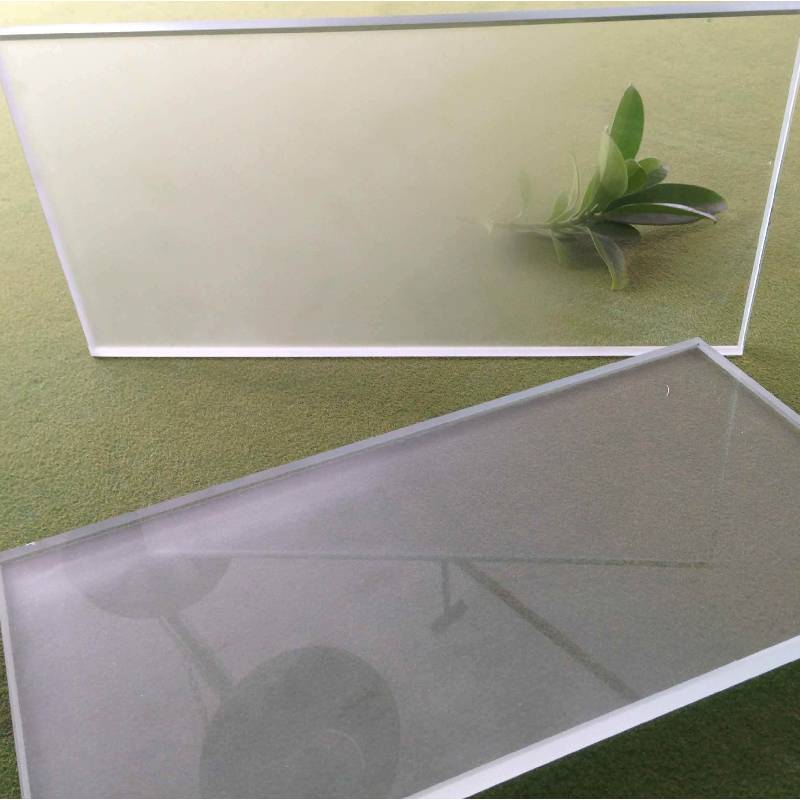
Light transmittance ≈ 70–90% depending on etch depth and thickness. Haze ≈ 60–95%. Surface Ra can sit around 0.4–1.2 μm. Service life? Indoors 20–30 years is normal; outdoors 10–20 years if edge-sealed and properly detailed. To be honest, cleaning frequency and airborne salts near coastlines matter a lot.
| Parameter | Options / Notes |
|---|---|
| Thickness | 4, 5, 6, 8, 10, 12 mm (others on request) |
| Standard sizes | 1650×2140/2440; 1830×2440; 2000×2440; 3300×2140/2250/2440; 3660×2140/2250/2440 mm; Max 3660×2440 mm |
| Opacity levels | Fully, semi-frosted, gradient (≈60–95% haze) |
| Safety options | Tempered (EN 12150), heat-strengthened (ASTM C1048), laminated |
| Edgework | Seamed, flat-polish, arris; CNC cutouts |
Customer note: “Fingerprints are way less obvious now,” is the line I hear most. Cleaning with mild neutral detergent does the trick; avoid abrasives.
| Vendor | Max size | Customization | Certifications | Lead time |
|---|---|---|---|---|
| TPTop Glass (Shahe City Economic Development Zone 32, Hebei, P.R. China) | 3660×2440 mm | Etch depth control, gradients, logo masks | ASTM/EN conformance testing; ISO 9001 | ≈ 10–20 days |
| Vendor A (EU fabricator) | 3210×2250 mm | Standard frost + temper/laminate | EN 12150, EN 14449 | ≈ 3–4 weeks |
| Vendor B (Regional) | 3000×2000 mm | Basic frosting only | Local building codes | ≈ 2–3 weeks |
A co-working space retrofitted 220 m² of Acid Etched Glass partitions. Result: measured glare reduction ≈ 65% at 2 pm west-facing exposure; average meeting-room illuminance stayed above 350 lux without blinds. Facilities reported 30% fewer complaints about reflection. Not bad for a one-week install.
Ask for sample chips of Acid Etched Glass in at least three haze levels and, if color matters, low-iron variants. For doors, specify tempered or laminated; for stairs/rails, laminated every time. If you need branding, mask-etched logos look crisp without glare.

Shahe City economic Development Zone 32,hebei,P.R .China.

+8618686009698
+8613191439158

eoch@shtopglass.com
jason@shtopglass.com